Semen Handling
Proper handling of semen straws is critical for improving conception rates and achieving consistent fertility in dairy herds. Correct storage in liquid nitrogen, timely thawing at the right temperature, and careful preparation for artificial insemination ensure maximum viability of sperm cells. Following these guidelines minimizes wastage, reduces breeding costs, and improves overall herd productivity. Inseminating at the right time after detecting standing heat increases the chances of successful pregnancy. By adopting proper semen straw practices, farmers can achieve faster genetic progress, ensure healthier calves, and enhance profitability in dairy farming.
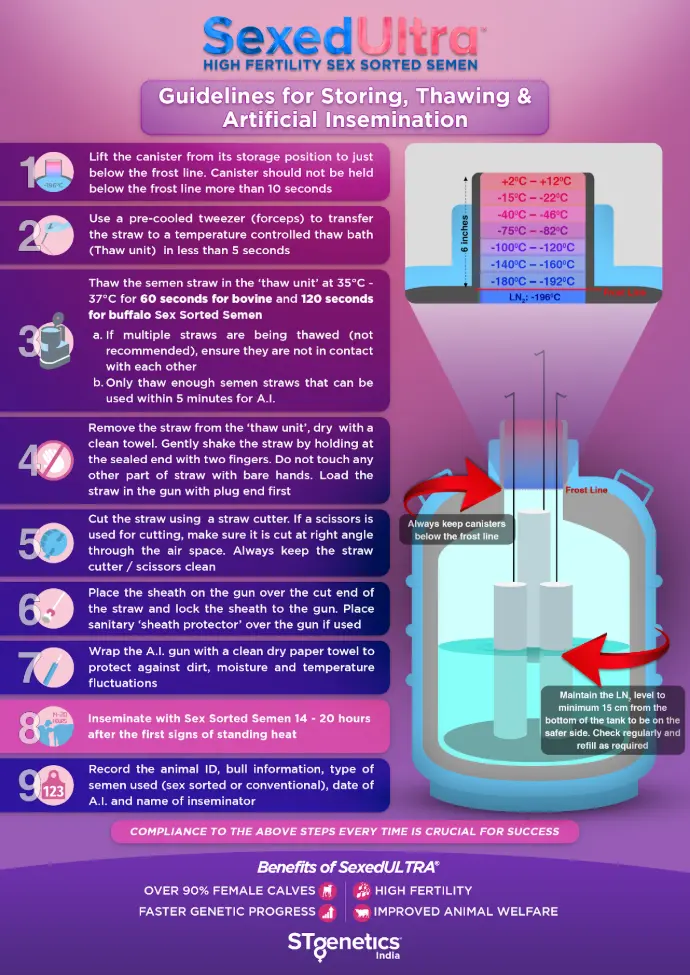
Source: Official ST genetics India Webpage.
Guidelines for Storing, Thawing & Artificial Insemination
To ensure maximum fertility and successful conception, follow these guidelines carefully when handling semen straws:
Storage & Handling
Always keep canisters below the frost line in the liquid nitrogen (LN₂) tank.
Do not hold canisters above the frost line for more than 10 seconds.
Maintain LN₂ levels at least 15 cm from the bottom of the tank. Check regularly and refill as required.
Thawing Procedure
Transfer Quickly: Use a pre-cooled tweezer (forceps) to move the semen straw from the tank to a thaw bath in less than 5 seconds.
Thawing Temperature: Thaw the semen straw in water at 35°C–37°C.
Bovine Semen Straw: 60 seconds
Buffalo Semen Straw: 120 seconds
Thaw only as many straws as can be used within 5 minutes. Avoid thawing multiple straws together.
Preparation for AI
Dry the thawed straw with a clean towel.
Gently shake and load the straw (plug end first) into the AI gun.
Cut the straw straight using a straw cutter or clean scissors.
Attach the sheath securely to the gun. Use a sanitary sheath protector if needed.
Wrap the AI gun with a clean dry paper towel to protect against dirt, moisture, and temperature fluctuations.
Artificial Insemination
Inseminate with semen straws 14–20 hours after the first signs of standing heat.
Record details: animal ID, bull information, type of semen (conventional or sexed), date of AI, and inseminator name.